
Trying a medical treatment for the first time can bring a mixture of curiosity and uncertainty. Hyperbaric oxygen therapy may feel especially unfamiliar because the treatment takes place inside a pressurized chamber.
Understanding the process beforehand can make the experience more comfortable. From the initial consultation to leaving the clinic after treatment, each step is designed to help ensure that the session is appropriate, safe and suited to the individual patient.
Here is what prospective patients can generally expect when visiting Swanson Hyperbarics for hyperbaric oxygen therapy in Fargo.
Your Visit Begins with a Consultation
Hyperbaric oxygen therapy is not simply a matter of entering a chamber and turning on the oxygen. The first step is determining whether treatment is appropriate and what type of protocol may be suitable.
During the consultation, the provider will discuss why you are considering HYPERBARIC MEDICINE, your symptoms, medical history, medications and any treatment you are already receiving. This is also an opportunity to explain what hyperbaric oxygen therapy can realistically contribute to your care.
Some conditions are recognized medical uses for HYPERBARIC MEDICINE, while others are considered investigational or off-label. The distinction can affect the available evidence, treatment approach and insurance coverage. Your provider should explain how your reason for seeking treatment fits within these categories.
The number, length and frequency of sessions are determined individually. A recommendation should reflect your health and treatment objectives rather than follow the same schedule for every patient.
After the provider completes their portion of the new-patient intake, every patient must attend a Patient Orientation for HYPERBARIC MEDICINE before their first treatment. This 15–20-minute orientation is presented by one of the clinic’s Certified Hyperbaric Technologists (CHTs) and provides an opportunity to address any remaining questions or concerns. This follows the same patient-orientation process used by hospital-based hyperbaric clinics.
Preparing for Your First Session
The clinic will provide instructions about what to wear and what can be taken into the chamber. These precautions are particularly important because oxygen-rich environments require strict fire-safety controls.
Patients are generally asked to avoid applying lotions, oils, makeup, hair products or other potentially restricted products before treatment. Electronics, lighters, jewelry and certain clothing materials may also need to remain outside the chamber. Follow the clinic’s instructions carefully rather than assuming an everyday item is safe to bring inside.
Tell the team if you have a cold, congestion, sinus pressure or difficulty clearing your ears. Changes in pressure can be uncomfortable when the ears or sinuses are blocked. You should also disclose any new medication, illness or change in your health since the consultation.
Eating a normal, balanced meal beforehand may be recommended unless the provider gives different instructions. People with diabetes should discuss blood-sugar management and monitoring with the clinical team.
Entering the Hyperbaric Chamber
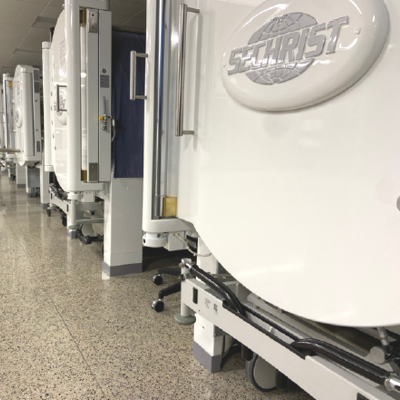
Swanson Hyperbarics uses single-person, or monoplace, hyperbaric oxygen chambers. The patient lies on a padded bed that slides into a transparent chamber.
Although the chamber is enclosed, its clear design allows the patient to see outside. The treatment team remains nearby and monitors the session. If you are concerned about claustrophobia, tell the provider before treatment so the team can discuss what may help you feel more comfortable.
Once you are positioned and ready, the chamber is closed and the pressurization process begins.
What Pressurization Feels Like
As pressure gradually increases inside the chamber, you may notice fullness or popping in your ears. The sensation is often compared with what happens during an airplane’s ascent or descent.
The team may show you techniques such as swallowing, yawning or gently equalizing your ears. It is important to communicate if you cannot clear the pressure or experience pain. The operator can adjust the rate of pressurization rather than expecting you to tolerate significant discomfort.
This first stage is sometimes called the compression or “dive” phase. Once the prescribed pressure has been reached and your ears feel comfortable, the main treatment period begins.
During the Treatment Period
You simply recline and breathe oxygen while the chamber remains at the prescribed pressure. The higher pressure allows the lungs to take in considerably more oxygen than they can under normal atmospheric conditions.
Treatment is generally quiet and does not require physical effort. Depending on the clinic’s setup, you may be able to watch television, listen to audio, rest or sleep while the team continues monitoring you.
At Swanson Hyperbarics, a typical treatment may last approximately 60 minutes, although a 90-minute session may be prescribed. The complete appointment will take longer because time is also required for preparation, pressurization and depressurization.
Session duration varies among facilities and treatment protocols. The Mayo Clinic’s overview of hyperbaric oxygen therapy notes that many HYPERBARIC MEDICINE appointments elsewhere last between 90 minutes and two hours.
Returning to Normal Pressure
At the end of the treatment period, the chamber pressure is gradually reduced. This is the decompression or “surfacing” phase.
You may again feel changes in your ears as the pressure returns to normal. This stage should not be rushed. Continue following the operator’s instructions and communicate any discomfort.
Once depressurization is complete, the chamber is opened and you can sit up gradually before getting out.
How You May Feel Afterwards
Many people return to their usual activities after an outpatient hyperbaric session. Some may feel tired or hungry for a short time.
The team may check how you are feeling and review any symptoms before you leave. If you experience persistent ear pain, changes in vision, breathing difficulty or another unexpected reaction, inform the provider.
Hyperbaric oxygen therapy is generally considered safe when delivered with proper screening and supervision. However, potential side effects can include ear or sinus discomfort, temporary vision changes, low blood sugar in people treated with insulin and anxiety related to enclosed spaces. Serious complications are uncommon but should still be discussed before treatment begins.
What Happens After the First Appointment?
One session may introduce you to the process, but many hyperbaric treatment plans involve a series of visits. The appropriate number depends on the condition, response to treatment and goals established with the provider.
The clinical team should explain how progress will be reviewed and whether adjustments may be needed. HYPERBARIC MEDICINE may also form one part of a broader care plan involving a physician, surgeon or another healthcare professional.
Patients traveling from Moorhead, West Fargo or elsewhere in the Fargo–Moorhead region should consider how the recommended schedule will fit into their routine before beginning a longer protocol.
Schedule a Hyperbaric Consultation in Fargo
Swanson Hyperbarics provides hyperbaric oxygen therapy in Fargo, ND using single-person chambers and individualized treatment plans.
The clinic is located at 3541 25th Street South, Suite 200, Fargo, ND 58104. Prospective patients can contact the team to discuss their needs, learn whether a consultation is appropriate and receive preparation instructions for their first visit.
Summary
Your first hyperbaric oxygen therapy visit begins with an evaluation of your health, treatment goals and suitability for HYPERBARIC MEDICINE. Before entering the chamber, the team will review safety requirements and explain how to manage changes in ear pressure. During treatment, you will recline and breathe oxygen while the chamber remains pressurized and the staff monitors the session. Understanding each stage—and communicating openly with the provider—can make the first appointment safer, calmer and more comfortable.